Developing young basketball players requires a structured approach that prioritizes foundational skills, age-appropriate progression, and a positive environment. Effective training for this demographic focuses on building a robust skill set while fostering a love for the game, rather than pushing for early specialization or intense competitive pressure. This guide outlines essential training tips designed to support young athletes in their basketball journey, ensuring both skill acquisition and sustained engagement.
Establishing Core Basketball Fundamentals
Success in basketball starts with mastering basic movements and techniques. For young players, consistent repetition of these core skills in a low-pressure setting is paramount. This builds muscle memory and confidence, which are critical as they advance.
Ball Handling and Dribbling Mastery
Effective ball handling is the bedrock of offensive play. Young players should develop proficiency with both hands. Initial drills focus on stationary control before progressing to movement.
- Stationary Dribbling: Practice dribbling with fingertips, keeping the head up. Emphasize low, controlled dribbles and higher, speed dribbles. Introduce alternating hands and crossover dribbles from a stationary position.
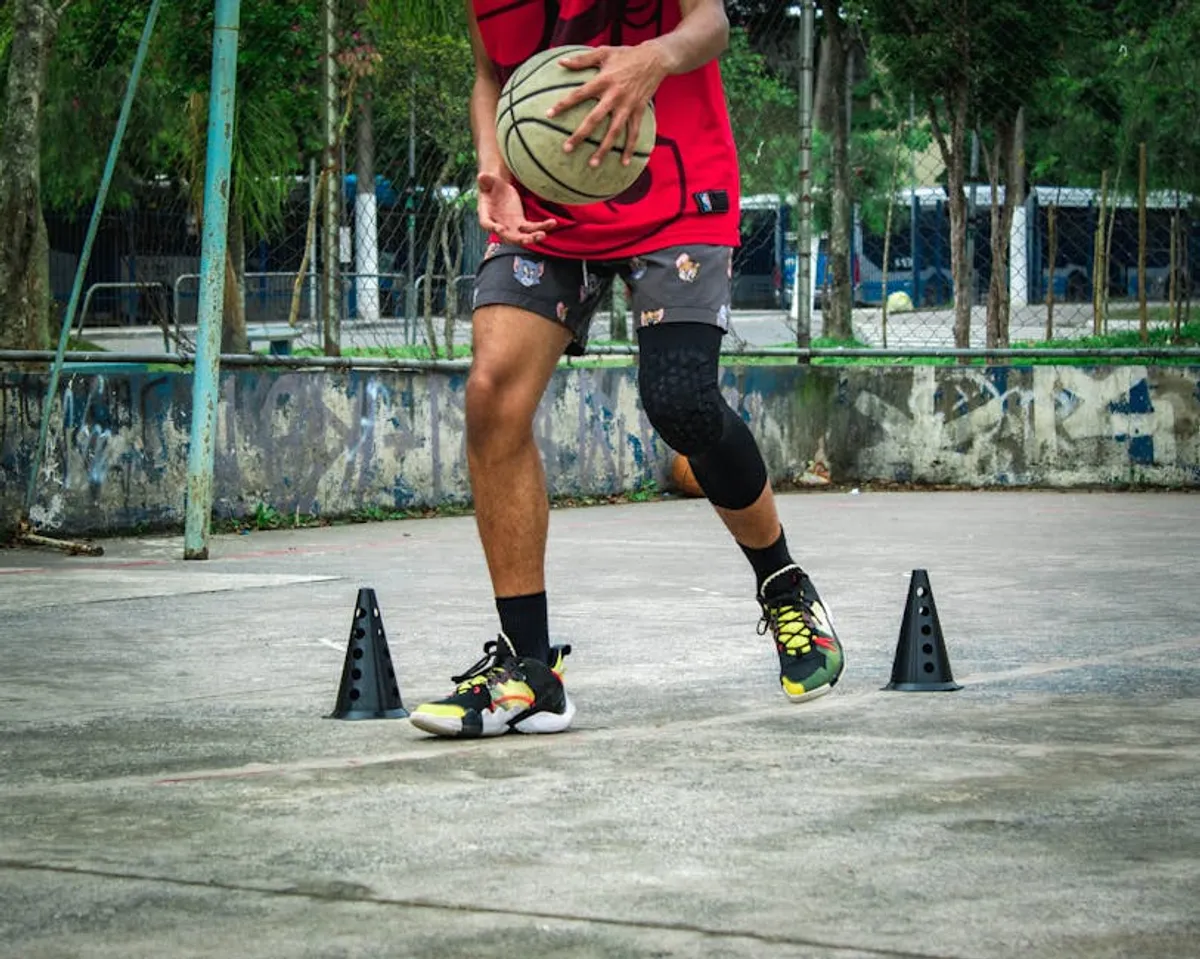
- Dribbling on the Move: Once stationary control is established, incorporate dribbling while walking, then jogging. Drills like dribbling around cones or performing crossovers while moving help integrate vision and footwork.
- Two-Ball Dribbling: For more advanced young players, two-ball dribbling drills enhance coordination and strengthen both hands simultaneously, preparing them for complex game situations.
Shooting Form and Technique
Proper shooting mechanics are crucial to avoid developing bad habits that are difficult to correct later. Focus on form over power or distance initially.
Key elements include:
- B.E.E.F. Method:
- Balance: Feet shoulder-width apart, knees slightly bent.
- Eyes: Focused on the rim.
- Elbow: Tucked in, pointing towards the basket.
- Follow-through: Hand in the cookie jar, wrist snapped down.
- Form Shooting: Start close to the basket, even lying on the back for wrist snap practice. Gradually increase distance as form stabilizes.
- Footwork Integration: Teach shooting off the catch and off the dribble, emphasizing the correct footwork to generate power and balance.
Passing Precision and Vision
Passing is a team skill that requires accuracy and decision-making. Young players need to understand different pass types and when to use them.
Essential passes:
- Chest Pass: Used for short to medium distances, emphasizing a strong push from the chest with two hands and a follow-through.
- Bounce Pass: Effective for passing around defenders, aiming for the ball to bounce two-thirds of the way to the receiver.
- Overhead Pass: Useful for clearing defenders or initiating fast breaks, thrown with two hands from above the head.
Drills should involve passing to moving targets and under light defensive pressure to simulate game conditions.
Defensive Stance and Footwork
Defense is often overlooked in youth training but is fundamental to success. Teach players to stay low, move laterally, and use active hands.
Core defensive components:
- Defensive Stance: Knees bent, back straight, head up, arms out wide.
- Lateral Slides: Practice shuffling side-to-side without crossing feet, maintaining a low stance.
- Close-Outs: Approaching an offensive player quickly but under control, ready to contest a shot or drive.
Age-Specific Training Progression
Training must be tailored to the physical and cognitive development of young athletes. Overloading players with complex strategies too early can lead to frustration and burnout.
Ages 6-9: Introduction and Play-Based Learning
At this stage, the focus is on fun, basic motor skills, and hand-eye coordination. Drills should be short, engaging, and incorporate elements of play.
Training emphasis:
- Simple dribbling games (e.g., "dribble tag").
- Modified hoops and lighter balls.
- Lots of positive reinforcement for effort.
- Introducing very basic rules of the game.
Ages 10-12: Skill Building and Team Concepts
Players at this age can handle more structured drills and begin to grasp basic team concepts. Repetition is key for skill refinement.
Training emphasis:
- More complex dribbling, passing, and shooting drills.
- Introduction to offensive spacing and defensive positioning.
- Understanding roles within a team (e.g., point guard, post player).
- Small-sided games (3-on-3) to encourage more touches and decision-making.
Ages 13-15: Refinement and Advanced Strategies
This period allows for the refinement of individual skills and the introduction of more sophisticated offensive and defensive schemes. Decision-making under pressure becomes a significant focus.
Training emphasis:
- Advanced ball handling moves (e.g., behind-the-back, spin moves).
- Developing specific offensive moves (e.g., post moves, jab steps).
- Understanding defensive rotations, help-side defense.
- Game situational drills and full-court scrimmages.
Pro Tip: Avoid early specialization. Young athletes who focus intensely on a single sport too early often face higher rates of overuse injuries and burnout. Encourage participation in multiple sports to develop a broader range of athletic skills, enhance overall physical literacy, and maintain enjoyment.
Integrating Physical Conditioning Safely
Physical preparedness is vital for performance and injury prevention. For young players, conditioning should be age-appropriate and integrated into basketball drills rather than separate, intense workouts.
- Dynamic Warm-ups: Start every session with light cardio and dynamic stretches (e.g., arm circles, leg swings) to prepare muscles.
- Agility Drills: Incorporate cone drills, ladder drills, and shuttle runs to improve quickness, change of direction, and footwork.
- Bodyweight Strength: Age-appropriate exercises like squats, lunges, push-ups (modified as needed), and planks build foundational strength without excessive stress on growing bodies.
- Cool-downs: Conclude sessions with light stretching to aid recovery and flexibility.
Fostering Mental Resilience and Sportsmanship
Basketball training extends beyond physical skills; it's an opportunity to develop character traits that benefit young players both on and off the court.
- Building Confidence: Provide positive reinforcement, celebrate effort and improvement, not just outcomes. Create a supportive environment where mistakes are seen as learning opportunities.
- Resilience and Handling Mistakes: Teach players that errors are part of the game. Encourage them to learn from missteps and immediately refocus on the next play.
- Sportsmanship: Emphasize respect for teammates, opponents, coaches, and officials. Instill the value of fair play and gracious conduct, regardless of game results.
Sustaining Development and Engagement
Consistent, well-planned training is essential for young basketball players. The journey involves not just skill acquisition but also mental fortitude and a deep appreciation for the sport. Coaches and parents play a crucial role in maintaining a balanced approach, prioritizing long-term development over immediate results. By focusing on fundamental skills, age-appropriate progression, physical conditioning, and mental resilience, young athletes can build a strong foundation for continued growth and enjoyment in basketball.
Frequently Asked Questions
How often should young basketball players train?
For players under 12, 2-3 structured sessions per week, combined with unstructured play, is often sufficient. Older players (13-15) might benefit from 3-4 structured sessions, ensuring adequate rest and recovery between training days.
What are the most important skills for beginner basketball players to learn first?
Beginners should prioritize ball handling (dribbling with both hands), proper shooting form (close to the basket), and basic passing (chest and bounce passes). These fundamentals provide the base for all other skills.
How can parents best support their child's basketball development?
Parents can support by providing encouragement, ensuring consistent attendance at practices, fostering a positive attitude towards effort and learning, and avoiding excessive pressure. Encouraging multi-sport participation and prioritizing enjoyment are also key.
Is it beneficial for young players to specialize in basketball early?
Generally, early specialization is not recommended for young athletes. Participating in multiple sports helps develop a broader range of athletic skills, reduces the risk of overuse injuries, and prevents burnout, leading to more sustained engagement and better overall athletic development.